


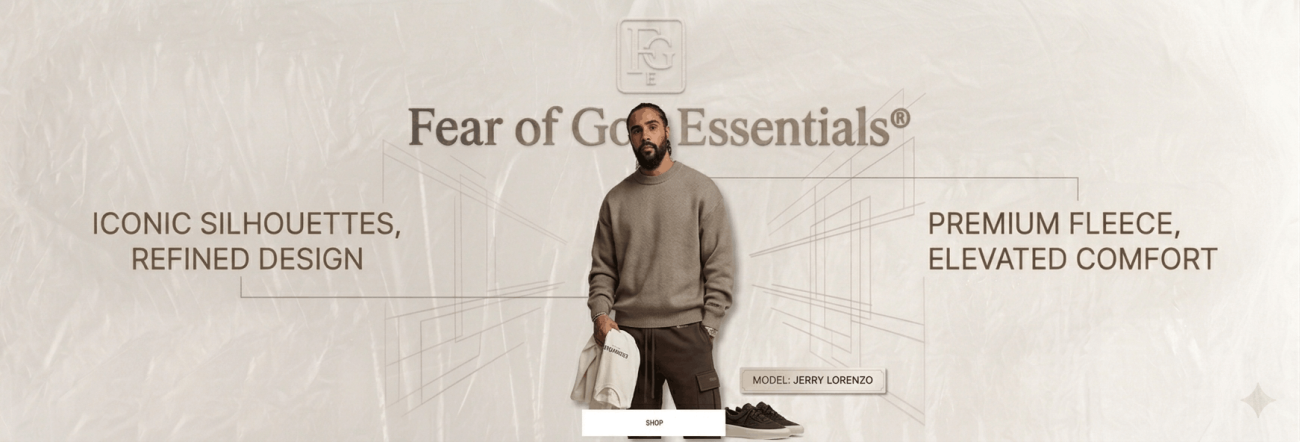
An authentic Essentials hoodie can be identified through a combination of tag accuracy, patch texture, stitching quality, and fabric weight rather than any single detail. Country-of-origin labels like Vietnam or China don’t by themselves indicate a fake, since Fear of God, like most global apparel brands, manufactures across multiple countries. This guide covers the verification checklist along with fit and fabric questions buyers ask most often.
How to Spot a Fake Essentials Hoodie Via Tags
Start with the neck and interior tags, since these carry the most checkable detail. Genuine tags use a consistent, evenly weighted font with clean spacing between letters, printed straight within the tag borders rather than tilted or crowded. The size, care instructions, and country-of-origin text should all use matching print quality, since replica producers often get one tag right while getting another slightly wrong. Compare against verified reference images from the brand’s official site if you’re unsure, since subtle font differences are easier to catch side by side than from memory.
Essentials Hoodie Rubber Hood Badge Stitching
The rubberized badge near the hood or neckline is one of the more reliable checkpoints because it’s difficult for counterfeit producers to replicate exactly. On a genuine hoodie, the patch sits centered and symmetrical relative to the collar seam, with a slightly raised, matte texture rather than a shiny, plastic-like finish. Look closely at the stitching around the patch’s edge: authentic construction shows even, tight stitching with no loose threads, while replicas frequently show looser thread tension or slightly uneven spacing where the patch meets the fabric.
Why Does My Essentials Hoodie Say Made in Vietnam
A Vietnam country-of-origin tag is common and does not indicate a fake on its own. Vietnam is one of several countries used across the global apparel industry for cut-and-sew production, and premium and luxury-adjacent brands regularly manufacture in multiple countries depending on the specific factory, fabric sourcing, and production run. The country-of-origin tag reflects where that particular garment was physically assembled, not a marker of authenticity by itself.
Essentials Hoodie Made in China Real or Fake
The same logic applies to a China-origin tag. China is a major global apparel manufacturing hub used by countless authentic, well-known brands, including many operating at premium price points. Seeing “Made in China” on an Essentials hoodie is not evidence of a counterfeit. What actually separates real from fake are the construction details covered elsewhere in this guide, tag font accuracy, patch texture, stitching consistency, and fabric weight, not the country name printed on the label.
Real vs Fake Essentials Hoodie Wash Tag Font
Font inconsistency is one of the more catchable authenticity signals once you know what to compare. Authentic wash tags use a specific, consistent letterform and stroke weight across the washing instructions, size marking, and origin text, evenly spaced and aligned within the tag. Replica versions commonly show slightly warped characters, inconsistent spacing between letters, or a font that looks close but doesn’t precisely match verified reference images. Photographing the tag and comparing it directly against an authenticated example is more reliable than trying to judge accuracy from description alone.
FOG Essentials RN Number Check
An RN number, short for Registered Identification Number, is issued by the Federal Trade Commission to businesses that manufacture, import, or sell textile and apparel products in the United States. Genuine Essentials garments typically carry an RN number on the interior tag, and buyers can verify it through the FTC’s public RN database to confirm the number is registered and associated with textile or apparel activity. A missing RN number, or one that doesn’t return a valid registered result, is worth treating as a caution flag alongside the other checks in this guide, though it’s most useful as one signal among several rather than a standalone test.
Where Is Fear of God Clothing Line Made
Like most contemporary premium and luxury-adjacent apparel brands, Fear of God’s production is spread across multiple countries and factories rather than a single manufacturing location, and the specific country can vary by product line, season, and fabric type. Because of this, seeing different country-of-origin tags across different Essentials pieces, or even across different colorways of the same style, is normal rather than suspicious.
Who Makes Fear of God Essentials Clothing
Fear of God Essentials is designed and creatively directed by Jerry Lorenzo’s Fear of God brand, with physical production handled through third-party manufacturing partners and factories, a standard structure across nearly the entire fashion industry rather than something unique to this brand. Specific factory partnerships are not typically published information, which is normal for apparel brands protecting their supply chain relationships.
How Do Essentials Hoodies Fit
Essentials hoodies fit oversized by design, with dropped shoulder seams that sit below the natural shoulder line, a boxy body silhouette, and a hem length longer than a standard hoodie. Most buyers get the intended look ordering their true size, while sizing down by one produces a cleaner, less exaggerated fit without losing the dropped-shoulder detailing.
Are Essentials Hoodies 100% Cotton
Essentials hoodies are generally made from a cotton-heavy fleece blend rather than 100 percent cotton, typically combining cotton with a smaller percentage of polyester or similar synthetic fiber. This blend helps the fabric hold its shape and structure better than pure cotton fleece would on its own, while still keeping the soft, brushed interior feel the line is known for. Checking the specific garment’s care tag confirms the exact fiber content for that piece, since blends can vary slightly across different product types within the collection.
Essentials Hoodie Shrinkage After Wash
Some shrinkage is normal with cotton-blend fleece, typically in the range of a few percent after the first several washes if hot water or high heat is used. Washing in cold water on a gentle cycle and air drying, or using a low-heat dryer setting, meaningfully reduces shrinkage risk. Buyers deciding between true-to-size and sizing down sometimes factor in this small amount of expected shrinkage when making the final call.
Essentials Hoodie Weight and GSM
Essentials hoodies use a heavyweight fleece construction, generally falling in a denser GSM range than typical fast-fashion hoodies, which is part of why the fabric feels substantial rather than thin. GSM, or grams per square meter, measures fabric density, and a higher number generally means more structure, warmth, and durability at the cost of some breathability. This heavier weight is a big part of why the fabric holds the brand’s signature boxy silhouette rather than draping limp like lighter jersey-weight hoodies.
Putting the Authenticity Checklist Together
No single detail proves a hoodie real or fake on its own. The most reliable approach checks tag font accuracy, rubber patch texture and stitching, RN number validity, and overall fabric weight together, while treating country-of-origin tags as neutral information rather than a red flag. Buying through the brand’s official channels or verified authorized retailers remains the simplest way to avoid needing this checklist at all, but for resale or secondhand purchases, running through each of these points before paying gives a much clearer picture than judging from photos alone.
Frequently Asked Questions
Is a Made in Vietnam or Made in China tag proof an Essentials hoodie is fake?
No. Both countries are common, legitimate manufacturing locations used by many authentic global apparel brands, including premium and luxury-adjacent labels. Country of origin alone does not indicate authenticity either way.
What is the fastest way to check if an Essentials hoodie tag is real?
Compare the font, letter spacing, and print alignment on the wash tag against verified reference images from the brand’s official site. Warped lettering or uneven spacing is a common sign of a replica.
Does an RN number guarantee an Essentials hoodie is authentic?
Not on its own. A valid, registered RN number is a good supporting signal, but it should be checked alongside tag font accuracy, patch stitching, and fabric weight rather than relied on as the only test.
Are Essentials hoodies true to size?
They run oversized by design. Ordering true to size delivers the classic relaxed, boxy fit, while sizing down one size gives a cleaner, more fitted silhouette.
Will an Essentials hoodie shrink in the wash?
Minor shrinkage of a few percent is normal with cotton-blend fleece, especially if washed in hot water or dried on high heat. Cold washing and air drying or low-heat drying keeps shrinkage to a minimum.
About Me
This guide combines publicly available apparel industry knowledge, standard FTC labeling regulations, and widely documented authentication practices used across resale and streetwear communities. No first-hand product testing, proprietary data, or unverified manufacturing claims are presented as fact. Readers handling high-value resale purchases are encouraged to cross-check any single detail against multiple sources or a professional legit-check service before finalizing a transaction. This content will be reviewed periodically as counterfeit techniques and brand labeling practices evolve. Specific factory names or unverified sourcing claims are intentionally excluded to avoid misinformation about the brand’s supply chain.